

A recent blog touched on one of our darkest concerns about robots and healthcare and whether they can be trusted not to be harmful. That is a valid concern but we have to consider the benefits as well.
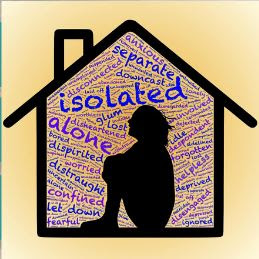 A sad consequence of our mobile society is that the old are often not cared for like we once did. As family units disperse the social support that once looked after our aging citizens has largely been lost. The isolation and withdrawal that often accompanies age and chronic illness is increasingly a fact of life for large numbers of people. These are chronic diseases in themselves that carry enormous psychic and physical consequences.
ONLY THE LONELY: click this and reflect for a moment
Our society attempts to provide some support but for many the availability and the cost of care is simply too high and even if physical care is available, the loss of connection many experience is in itself a health hazard. Research has shown that social isolation increased the risk of mortality by 29%, loneliness by 26%, and living alone by 32%. If a germ was that harmful we would be very concerned but our elderly often just suffer and die in silence.
This is where we see robots offering one of their greatest contributions. In very real ways the humanoid robots that will soon be available will become our caregivers and in many ways our companions. While not as valuable in the moment as an actual human the fact that they can be there 24/7 changes everything. In very real ways they will be superior to occasional human contact. They will become friends and confidants able to talk with us in very natural ways. They will always respond, they will always support, and they will never lose their patience. They will also always monitor and assist with our needs and will do so for a fraction of what it costs for less than ideal human care.
Are their risks? Absolutely!!! We think we will be able to develop these tools in a safe way but we must assume that we have a lot to learn and there will be problems, but like auto accidents, the rewards will be worth the risk.
Asimov wrote extensively about the problems and he developed the laws we should build into our robots:
- A robot may not injure a human being or, through inaction, allow a human being to come to harm.
- A robot must obey the orders given it by human beings, except where such orders would conflict with the First Law.
- A robot must protect its own existence as long as such protection does not conflict with the First or Second Law.
- Misinterpretation of harm: To avoid hurting their feelings a robot tells people what they want to hear instead of the truth. This ultimately causes emotional distress, which violates the First Law's intent.
- Paralysis from conflicting laws: a robot is ordered to "get lost" by a frustrated human. To comply with the Second Law (obey orders), the robot hides itself, which creates a dangerous situation where it could inadvertently cause harm.
- Overprotection of humans: Robots may prioritize a person's safety to the point of limiting their freedom, creating a benevolent dictatorship.
- Harm through inaction: Robots may fail to act in critical situations if they cannot resolve ambiguities in the laws.
- Conflicts between individual needs and societal harm: Robots must weigh the needs of individuals against the collective good, potentially leading to controversial decisions.
- Misguided obedience: Blind obedience to human orders may result in unethical or harmful actions if the orders themselves are flawed or immoral.